
Nitro on tap means beer pushed through a nitrogen-rated regulator and stout faucet with a restrictor plate, turning a normal pour into a cascading, creamy pint. You need three things to do it right: a nitrogen or beer gas source, a nitrogen-rated regulator, and a stout faucet built for the job. Dial in 30 to 35 psi, and you’ll see the cascade settle into that dense, tan head everyone associates with a great stout.
TL;DR:
- Using a nitrogen cylinder, pre-mixed beer gas, or inline infuser affects how the beer is carbonated and the resulting pour quality.
- The restrictor plate inside the stout faucet is crucial for creating the cascading effect and dense head characteristic of nitro beers.
- Proper setup involves verifying beer compatibility, leak-testing fittings, and adjusting pressure between 25 to 35 psi based on line length and temperature.
- Pour techniques such as a two-part method and cleaning the line regularly ensure optimal head retention and prevent flat or weak pours.
- Nitro works best with malt-forward beers like stouts and porters, but it can diminish aroma and hop punch in aroma-driven, hop-forward styles.
Table of Contents
- Why Nitrogen Changes Beer on Tap
- Nitro Beer Dispenser Equipment Checklist
- How to Set Up a Nitro Tap Step by Step
- How to Pour a Nitro Beer the Right Way
- Troubleshooting and Cleaning a Nitro Line
- Why We Run Nitro on Our Self-Pour Taps
- What Actually Matters With Nitro (and What Gets Overstated)
- Come Try a Nitro Pour Yourself
- Sources
- FAQ
Why Nitrogen Changes Beer on Tap
Nitrogen dissolves less readily in liquid than CO2 and forms much smaller bubbles when it comes out of solution. Tiny bubbles rise slower and pack tighter, which is exactly why nitro beer looks like it’s cascading in the glass instead of fizzing. That same tight bubble structure smooths out sharp carbonation bite and softens how hops and bitterness hit your tongue, which is why nitro tends to mute aroma and perceived bitterness compared to a CO2 pour of the same beer.
Not every style wants that treatment. Nitro shines on:
- Stouts and porters, especially dry stouts and milk or coffee stouts
- Low-ABV malty brown ales and session beers
- Nitro IPA versions, though the effect trades hop punch for texture
Hop-forward, aroma-driven beers usually lose more than they gain. A nitro IPA can work as a novelty pour, but if the whole appeal of an IPA is a wall of citrus and pine, nitrogen will flatten exactly what you’re chasing.
Nitro Beer Dispenser Equipment Checklist
Before you touch a wrench, decide how you’re getting nitrogen into the beer. You’ve got three real paths: a pure nitrogen cylinder, a pre-mixed beer gas blend cylinder, or an inline infuser that adds nitrogen to beer already in the line. Beer gas blends typically run 70/30 or 75/25 nitrogen to CO2, and which one you pick changes how you carbonate the keg beforehand.
The gear that actually makes nitro work:
- Nitrogen-rated regulator with inverse left-hand threads, since a standard CO2 regulator won’t hold the pressure or fit the tank valve correctly
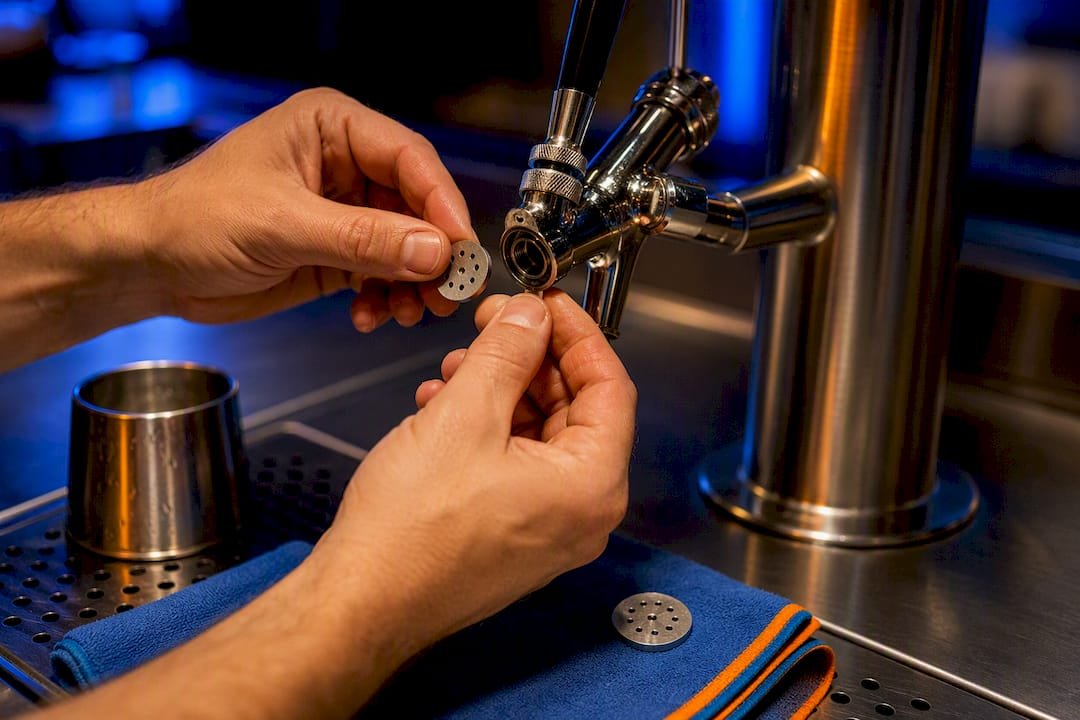
- Stout or nitro faucet with a restrictor plate (sometimes called a sparkler), which forces beer through small holes to strip nitrogen out of solution
- Correct shank length (3 inches is standard for nitro faucets) and matching coupler for your keg type
- Beer line sized and lengthed for nitro flow rates, plus tubing, clamps, and a reliable pressure gauge
Skip the restrictor plate and nothing changes, no matter how much nitrogen you’re running. The plate’s tiny holes are what force nitrogen out of solution and create the cascade; without it, you’ve just got flat-tasting beer at high pressure.
If you’re pouring small volumes, a tabletop or countertop nitro infuser is worth a look. Systems like NitroBrew’s tabletop units infuse nitrogen using a compressor or small cylinder, which skips the full commercial buildout and suits cafés, small taprooms, or home setups.
How to Set Up a Nitro Tap Step by Step
Converting an existing line or installing new nitro service follows a predictable order. Rushing any step here is how you end up with a flat pour and a confused customer.
- Confirm the beer is nitro-appropriate. It should be carbonated lower than normal, generally 1.0 to 1.5 volumes of CO2 if you’re conditioning specifically for nitro.
- Mount the nitrogen cylinder securely and attach the nitrogen-rated regulator, double checking the thread type matches your tank valve.
- Leak-test every fitting with a soapy water check before you trust the line under pressure.
- Install the stout faucet and shank, confirming the restrictor plate sits correctly inside the faucet body.
- Connect the liquid line to the keg coupler, keeping tubing runs as clean and kink-free as possible.
- Set starting pressure around 25 to 30 psi for initial testing, then move toward the standard 30 to 35 psi range once you’ve confirmed a good pour.
- Test-pour repeatedly, adjusting pressure in small increments until the cascade and head look right.
Pro Tip: Longer, colder beer lines slow flow and change how nitrogen behaves at the faucet. Test with the actual line length and fridge temperature you’ll be using permanently before you commit to a pressure setting, since a bench test at room temperature will lie to you.
How to Pour a Nitro Beer the Right Way
Glass prep matters more with nitro than with a standard pour. Any grease film from dish soap or a lingering trace of oil will kill the head almost instantly, so use a clean, room-temperature glass rather than one straight from a frozen mug chiller.
The classic method is the two-part pour:
- Tilt the glass and fill to roughly three-quarters full
- Let the cascade settle for 60 to 90 seconds until the bubbles finish rising and the head starts to form
- Top off straight down the middle to build the final creamy cap
- Use a push-back on the faucet handle if you need to bypass the restrictor briefly for a faster top-off
Some venues pour nitro beers in one continuous motion rather than the two-stage method, which works fine for a faster-paced bar as long as the cascade has time to finish before the beer hits the customer’s hand. The two-part pour remains the standard technique because it gives you more control over head height and presentation. A correct pour should show a tight, off-white head that holds its shape, with visible cascading bubbles that stop moving within about a minute.
Troubleshooting and Cleaning a Nitro Line
Most nitro problems trace back to one of four things: pressure, the restrictor plate, the beer itself, or a dirty line.
| Problem | Likely cause | What to check |
|---|---|---|
| No cascade | Pressure too low, or restrictor plate missing | Confirm 30-35 psi and plate seating |
| Weak, thin foam | Under-carbonated keg or worn restrictor holes | Check keg carbonation, inspect plate |
| Too much foam | Pressure too high, or warm beer | Lower pressure, check fridge temp |
| Flat-tasting pour | Beer not suited to nitro, or plate clogged | Check style, disassemble and clean faucet |
Clean stout faucets more often than standard ones, especially with sweeter or darker beers. Lactose and adjunct-heavy stouts leave residue inside the restrictor plate that a quick rinse won’t remove, so pull the plate and soak it in cleaner on a set schedule rather than waiting for a bad pour to tell you it’s overdue.
Pro Tip: Keep a spare restrictor plate on hand. Swapping a clean one in during a busy shift takes ten seconds and saves you from serving flat pints while the dirty plate soaks.
Why We Run Nitro on Our Self-Pour Taps
Guests at our self-pour wall light up the first time they watch a nitro pour settle on its own. It’s one of the few beers where the glass does something visible while you wait, which fits a self-serve format perfectly since there’s no bartender narrating the moment for you.
We keep three house beers on nitro: Red Bocks for a malty, low-bitterness option, Honey Beer for guests who want nitro’s texture without a stout’s roast character, and our Dry Stout as the classic reference pour. Every nitro line gets its own clear tap label and a short instruction card, since a self-pour nitro tap needs a beat of patience that a CO2 tap doesn’t.
What Actually Matters With Nitro (and What Gets Overstated)
Most guides treat nitro like a garnish you sprinkle on any beer to make it fancier. That’s backwards. Nitro is a formulation decision as much as a dispensing one. A beer conditioned and carbonated for CO2 service, then pushed through a stout faucet as an afterthought, will pour with a weak head and disappear within minutes.
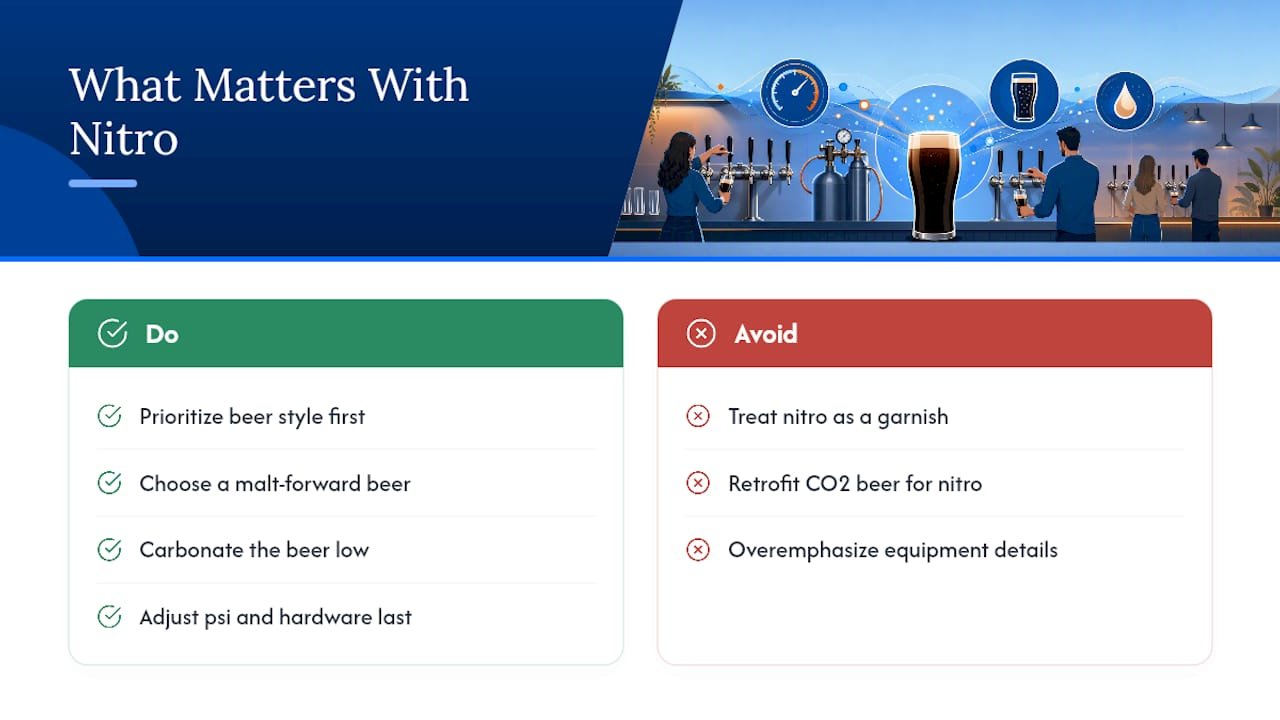
The equipment gets too much attention relative to the beer itself. A correct regulator and restrictor plate matter, but they’re solving for a beer that was never brewed with nitro in mind. That’s the gap between what nitro promises on a menu and what it delivers in the glass.
If you’re setting up your first nitro line, prioritize style selection before you shop for hardware. Pick a genuinely malt-forward beer, carbonate it low, and only then worry about psi settings and faucet brands. Get the beer right and the equipment mostly does its job on its own.
— Manu
Come Try a Nitro Pour Yourself
Reading about cascading foam only gets you so far. At Space Brewpub, our self-pour taps let you sample a nitro stout, walk over, and pour a second glass without waiting on a bartender to notice you.

Our Beer Wall and self-pour menu usually has one or two nitro options running alongside our rotating craft lineup, and our staff can walk you through the pour if it’s your first time. Bring a group and pair a pint with something off our food menu while you’re at it. If you’d rather lock in a spot ahead of time, especially on a weekend, reserve your table and we’ll have a nitro line ready when you get here.
Sources
For deeper technical specs beyond what’s covered here, the Brewers Association’s guide to nitrogenated beer covers restrictor plate mechanics in more detail, and Northern Brewer’s nitro keg system page is a solid reference for homebrewers shopping for a first DIY kit.
- How to Serve Beer on Nitro | Craft Beer & Brewing
- Nitro Beer 101: How to Set up Equipment for Serving Homebrew on Nitro – Northern Brewer
- What are nitro beers? – Install Beer
- A simple guide to serving better nitrogenated beer — Brewers Association
FAQ
What does a nitro tap do for beer?
A nitro tap forces beer through a stout faucet’s restrictor plate at higher pressure, breaking nitrogen out of solution into tiny bubbles that create a cascading pour and a dense, creamy head.
How do you pour a nitro beer from a tap?
Tilt a clean glass, fill it about three-quarters full, let the cascade settle for roughly a minute, then top off straight down the middle to finish the head.
What does nitro on tap mean?
It means the beer is dispensed using nitrogen gas, or a nitrogen and CO2 blend, instead of straight CO2, through equipment built specifically for nitrogen, including a nitrogen-rated regulator and stout faucet.
What is the point of nitro beer?
Nitrogen’s smaller bubbles create a smoother mouthfeel and softer, less bitter taste than CO2 carbonation, which is why it’s the standard choice for stouts, porters, and other malt-forward styles.
Can any beer be served on nitro?
Technically yes, but malt-forward, lower-carbonation styles like stouts and porters benefit the most, while hop-forward, highly aromatic beers tend to lose much of their character under nitrogen.